Living Walls vs Vertical Gardens vs Green Walls: What's the Difference?
Updated: Sep 3

Search online for living walls, and you quickly discover a confusing landscape of terms.
Some people search for vertical gardens. Others call them green walls, plant walls, vertical plant walls, or indoor green walls. Architects often discuss living wall systems, while homeowners may simply search for "a plant wall for my apartment."
While these terms are often used interchangeably, small differences in meaning, industry use, and search behavior do exist. Many overlap and may describe similar concepts, while others can refer to entirely different systems depending on context.
Understanding the difference matters. A decorative green feature and a true living wall system can perform very differently in terms of maintenance, design flexibility, wellness impact, acoustics, and long-term value.
The Rise of Biophilic Design in Luxury Interiors
Across Marbella, Estepona, Málaga, and the Costa del Sol, biophilic design is increasingly becoming part of luxury interiors. As developers, architects, hospitality spaces, clinics, and homeowners adopt greener environments, understanding the language behind these systems becomes increasingly valuable.
What Is a Living Wall?
A living wall is an integrated planting system designed to become part of an interior or architectural environment.
Unlike simple decorative greenery, indoor living walls typically include:
Modular planting panels
Integrated irrigation systems
Drainage management
Plant selection strategies
Maintenance planning
Modern living wall construction on the Costa del Sol is designed as a functional interior element rather than only decoration.
Living walls can improve:
Acoustics
Indoor wellbeing
Perceived comfort
Visual experience
Biophilic connection
In luxury interiors across Marbella and the Costa del Sol, living walls increasingly appear in:
Reception areas
Wellness spaces
Clinics
Offices
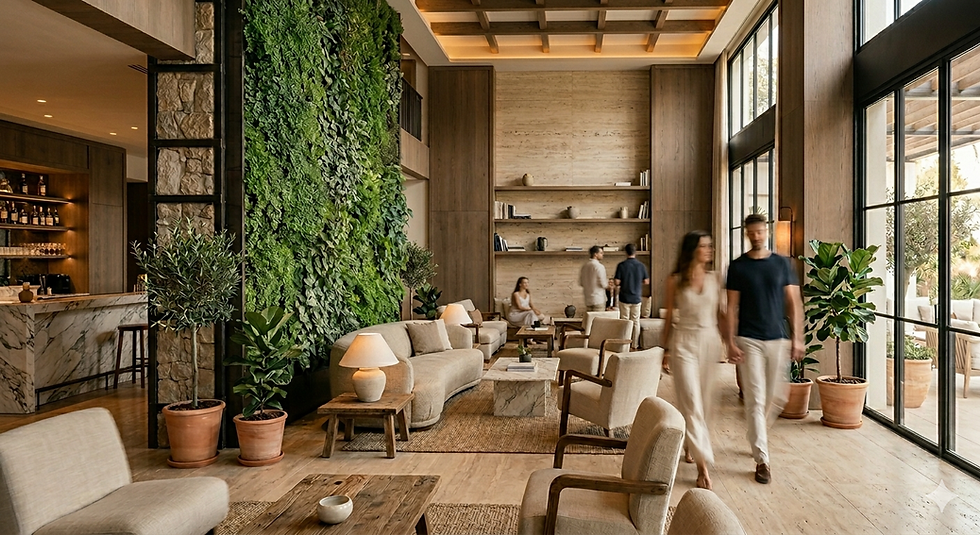
Hotel lobbies
Residential developments
What Is a Green Wall?
Green wall is one of the most widely used umbrella terms and is often used interchangeably with living wall. Depending on context, it may refer to integrated living wall systems, climbing vegetation, preserved moss walls, facade greenery, or decorative planted surfaces.
This is where confusion often begins.
Someone searching for an indoor green wall may imagine a sophisticated living wall installation. Another person may be searching for preserved moss panels. Because the term is broader, green wall often acts as an umbrella phrase.
What Is a Vertical Garden?
Vertical garden is often the most consumer-friendly phrase.
Homeowners frequently use it when searching for:
Apartment greenery ideas
Balcony systems
Indoor plant displays
Compact green solutions
Technically, many living walls are also vertical gardens. The difference is often positioning. Vertical garden is often used interchangeably with living wall, particularly in residential and lifestyle contexts.
What Is a Plant Wall?
Plant wall is commonly used in interior design and visual platforms.
Pinterest, Instagram, and design inspiration websites frequently use plant wall terminology because it feels approachable and descriptive. Plant wall searches may include:
Artificial plant walls
Decorative foliage panels
Preserved installations
Real plant systems
The phrase itself does not always indicate quality, maintenance level, or construction method.
Common Search Terms People Use

People searching for living walls often use different language depending on the project type. Search behavior often changes depending on whether someone is a homeowner, architect, interior designer, developer, or hospitality brand.
Residential searches often include:
Indoor vertical garden
Apartment plant wall
Plant wall ideas
Green feature wall
Commercial searches often include:
Living wall systems
Office green wall
Reception plant wall
Green wall systems
Hospitality and wellness searches often include:
Hotel living wall
Clinic green wall
Biophilic interiors
Architectural and design searches often include:
Integrated living walls
Vertical Greenery Systems (VGS)
Indoor green wall systems
Which Terms Do Architects and Developers Actually Use?
Architects and commercial designers commonly use:
Living wall systems
Green wall systems
Vertical Greenery Systems (VGS)
Integrated living walls
Indoor green wall systems
Biophilic systems
In larger architectural and commercial projects, professionals may also use the term Vertical Greenery Systems (VGS), particularly when discussing integrated green wall systems and building-scale applications.
Homeowners often search:
Plant wall
Indoor vertical garden
Green feature wall
Plant wall ideas
Interior designers frequently move between both worlds. For businesses operating in Marbella and across the Costa del Sol, understanding these language patterns helps bridge inspiration and technical planning.
This is one reason conversations around living walls increasingly overlap with wellness, hospitality, and architectural strategy.
Living Wall vs Vertical Garden: Which Works Better for Luxury Interiors?
For premium interiors, system integration matters.
Professionally designed living wall systems often provide:
✔ Integrated irrigation
✔ Cleaner visual finish
✔ Larger installation possibilities
✔ Stronger architectural impact
✔ Maintenance planning
✔ Better plant health control
Smaller vertical gardens can work well for decorative and residential applications.
For smaller residential accents, a simpler vertical garden can be the right call:
✔ Lower upfront cost
✔ Faster, simpler installation
✔ Well suited to compact, decorative spaces
✖ Little to no integrated irrigation
✖ More manual watering and hands-on upkeep
✖ Limited scale for hotel, office, or clinic-sized installations
In short: choose a vertical garden for a small, budget-friendly green accent. Choose a professionally engineered living wall when the space, maintenance expectations, or architectural impact call for a system built to perform over years, not months.
For offices, clinics, hospitality projects, and luxury developments, integrated living wall systems are often more suitable.
The Costa del Sol Shift Toward Biophilic Interior Design
Across Marbella, Estepona, Málaga, and the wider Costa del Sol, luxury interiors are shifting toward wellness-focused environments.
Developers increasingly want spaces that feel:
Healthier
Calmer
More memorable
More experiential
Living walls are becoming part of this movement because they combine architecture, nature, and emotional experience within a single system.
As biophilic design continues shaping modern architecture, developers, interior designers, clinics, hospitality brands, and homeowners are increasingly looking for ways to create interiors that feel calmer, healthier, and more memorable.
Bringing Clarity to Modern Green Wall Design
The language around living walls can appear confusing at first.
Living walls, green walls, vertical gardens, and plant walls often overlap, but understanding their differences leads to better design decisions.
As biophilic design continues shaping luxury interiors across Marbella and the Costa del Sol, these systems are increasingly becoming part of broader architectural conversations rather than simple decoration.
Bring Living Walls Into Your Interior Project
Biophilic design solutions for Marbella, Estepona, and Málaga interiors.
FAQ
Is a living wall the same as a vertical garden?
Not always. Many living walls are vertical gardens, but living wall systems often include integrated irrigation and architectural planning.
What is the difference between a green wall and a living wall?
Green wall is a broader term that may include living systems, moss walls, climbing plants, and decorative greenery.
What is a plant wall?
Plant wall is a descriptive phrase often used in interior design and visual platforms. It may refer to real plants, artificial greenery, or preserved systems.
What type of green wall works best indoors?
Indoor living wall systems with irrigation and maintenance planning generally provide the most reliable long-term solution.
Are living walls suitable for Marbella apartments?
Yes. Compact indoor living wall systems and framed plant systems can work very well in apartments and smaller spaces.
Are moss walls and living walls the same?
No. Moss walls use preserved materials and require different maintenance and design considerations.


Comments