How Living Walls Are Shaping New Developments on the Costa del Sol
Updated: Aug 3
Across Marbella, Estepona, Málaga, and surrounding areas, living walls in new developments on the Costa del Sol are increasingly being used to create more memorable, wellness-focused, and experience-driven interiors. Buyers and investors are no longer evaluating projects only by square meters, sea views, or finishes. They are evaluating how spaces feel.
Living walls are becoming part of this shift.
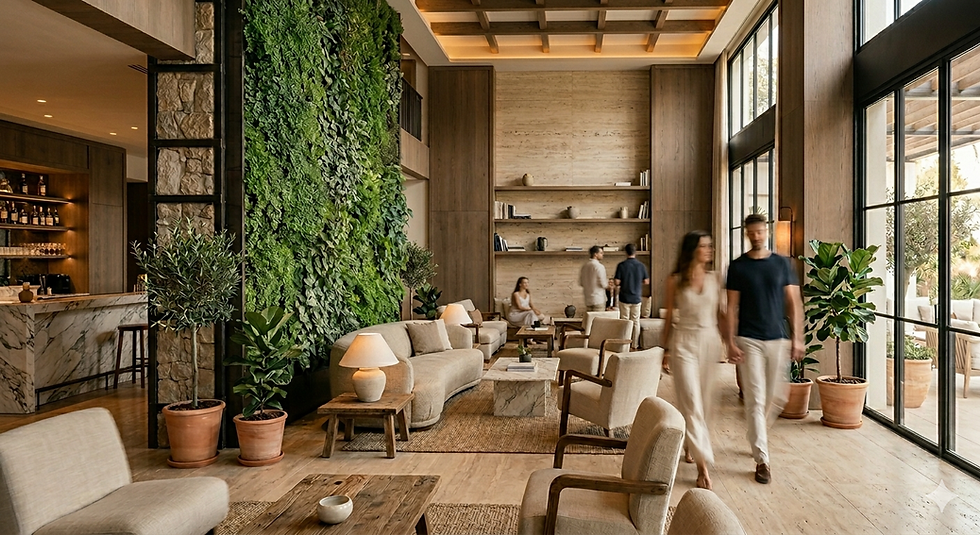
From reception areas and wellness spaces to private resident lounges and hospitality-inspired amenities, indoor living walls are being integrated into new developments as architectural systems that influence atmosphere, identity, and perceived value.
For developers, architects, and interior designers, living walls are no longer decorative extras. They are part of a broader movement toward biophilic design and experience-led real estate development on the Costa del Sol.
How Living Walls Are Influencing New Developments on the Costa del Sol
The Costa del Sol property market has become increasingly competitive.

New developments are no longer competing only on location. They are competing on lifestyle positioning, wellness amenities, interior experience, and long-term emotional appeal.
This shift can be seen across:
branded residences
boutique developments
wellness-oriented residential projects
hospitality-inspired apartment complexes
modern co-living concepts
premium gym and spa facilities
developer showrooms and sales lounges
As buyers become more design-aware, interiors are expected to feel calmer, healthier, and more connected to nature.
This is one of the reasons biophilic design is becoming more visible in modern Costa del Sol architecture. Natural materials, soft textures, organic lighting, integrated greenery, and indoor living walls are increasingly being used to create environments that feel more sophisticated and emotionally engaging.
Living walls fit naturally into this direction because they combine architecture, atmosphere, and wellness in a highly visual way.
Living Walls Are Becoming Part of the Architectural Identity

One of the biggest changes in modern developments is the move away from purely decorative greenery.
In many new projects, living wall systems are now planned as integrated architectural elements from the beginning of the design process.
This changes everything.
Instead of adding plants at the end of a project, developers and interior designers are using indoor living walls to shape:
arrival experiences
spatial atmosphere
visual identity
acoustic comfort
perceived exclusivity
wellness positioning
A properly designed living wall can become the visual anchor of an interior space without overwhelming the architecture around it.
This is especially important in modern Mediterranean developments where minimal interiors, stone textures, warm woods, and neutral palettes dominate the design language. Living greenery introduces softness, depth, and movement without compromising the clean aesthetic many developers aim for.
On the Costa del Sol, this approach works particularly well in projects designed around indoor-outdoor living and hospitality-style experiences. As explored in our guide to living walls for luxury interiors on the Costa del Sol, these systems are increasingly being integrated into spaces that prioritize atmosphere, wellness, and architectural identity.
Where Living Walls Create the Biggest Impact in New Developments
Not every area within a development benefits equally from a living wall installation.
The highest-impact locations are usually shared spaces where atmosphere and first impressions matter most.
Sales Offices and Show Apartments
Living walls are also increasingly being used in sales offices and show apartments within new developments.
On the Costa del Sol, many purchasing decisions are emotional and experience-driven. Buyers are often visiting multiple developments in a short period of time, which makes atmosphere and memorability extremely important.
A well-integrated living wall can help a show apartment or sales space feel:
more premium
more lifestyle-oriented
more architecturally refined
more emotionally engaging
For developers, this can strengthen the perceived identity of a project before residents even move in.
Living walls also photograph exceptionally well, making them valuable visual elements for marketing materials, social media content, and promotional campaigns connected to new developments.
Reception Areas and Arrival Spaces
Reception interiors increasingly function like boutique hotel lobbies rather than traditional residential entrances.
Developers are investing more heavily in these spaces because they shape buyer perception immediately.
Living walls help create:
stronger visual identity
warmer atmosphere
premium hospitality feel
memorable first impressions
softer acoustics in hard-surface interiors
In sales offices and showrooms, they also help developments feel more established, emotionally appealing, and experience-driven before construction is even completed.
Wellness and Spa Areas
Wellness amenities are becoming central selling points in many Costa del Sol developments.
Indoor living walls work particularly well in:
spa reception areas
yoga studios
wellness lounges
indoor pools
recovery spaces
meditation rooms
These environments already focus on calmness, restoration, and sensory experience. Living greenery reinforces those goals naturally while helping spaces feel less clinical or artificial.
Resident Lounges and Co-Working Areas
Modern developments increasingly include shared lifestyle spaces.

Resident lounges, social clubs, and co-working interiors benefit from living walls because they help larger communal spaces feel more welcoming and less transactional.
This is especially relevant in developments targeting:
digital nomads
international buyers
wellness-oriented residents
remote professionals
lifestyle investors
Biophilic interiors can help these shared environments feel more residential, relaxed, and human-centered.
Fitness Spaces and Indoor Gyms
Gym interiors often suffer from hard acoustics, artificial lighting, and visually cold materials.

Living walls help soften these environments while contributing to a more premium wellness atmosphere.
In higher-end developments, developers are increasingly designing fitness spaces that feel closer to boutique wellness clubs than conventional apartment gyms.
Integrated greenery supports this transition particularly well.
Living Walls and Buyer Psychology
In competitive real estate markets, emotional perception matters.
Many purchasing decisions are influenced by atmosphere long before technical details are analyzed.
Living walls contribute to this by helping interiors feel:
calmer
healthier
more exclusive
more design-led
more memorable
more aligned with modern luxury expectations
This becomes particularly important in Costa del Sol developments where buyers are often comparing multiple high-end projects within the same region.
When many developments offer similar layouts, pools, gyms, and sea views, interior atmosphere becomes part of differentiation.
Developers increasingly understand that emotional experience influences perceived property value.
Biophilic Design Is Aligning With Mediterranean Living
Biophilic design works especially well on the Costa del Sol because it aligns naturally with the region’s lifestyle identity. As explored in Why Biophilic Design Costa del Sol Trends Are Reshaping Luxury Interiors, developers and designers are increasingly creating spaces that feel healthier, calmer, and more connected to nature rather than simply more luxurious.
The Mediterranean approach to living already emphasizes:
natural light
connection to outdoor spaces
slower lifestyle rhythms
wellness-oriented environments
organic textures and materials
Living walls extend these ideas into interior architecture.
Rather than feeling artificial or trend-driven, they often feel consistent with the broader architectural direction already shaping modern developments in Marbella, Estepona, and Málaga.
This is one reason indoor living walls are becoming more common in:
luxury apartment developments
wellness-focused communities
boutique hospitality projects
branded residences
premium commercial interiors
Design Considerations for Developers and Architects
Successful living wall installations require significantly more planning than decorative planting.
The strongest projects treat living walls as integrated interior systems rather than visual accessories.
Important considerations include:
irrigation systems
drainage management
maintenance access
plant selection
humidity conditions
natural and artificial lighting
long-term operational planning
integration with surrounding materials
This is particularly important in commercial and shared residential interiors where reliability, cleanliness, and longevity are essential.
When properly planned, living wall systems can remain visually refined and operationally stable over the long term.
For the technical side of this, including wall compatibility, load requirements and BIM integration, see our living wall specification guide for developers and architects.
Maintenance Reality in New Developments
One of the biggest misconceptions around living walls is that they are either maintenance-free or impossibly difficult to maintain.
The reality sits somewhere in between.
Professional indoor living walls require:
routine monitoring
pruning
irrigation checks
occasional plant replacement
seasonal adjustments
However, modern living wall systems are far more advanced than many people assume.
Integrated irrigation systems, modular planting structures, and professional maintenance planning make long-term operation significantly more manageable than older vertical garden systems.
For developers, this is important because the success of a living wall depends as much on operational planning as on visual design.
Living Walls and the Future of Costa del Sol Developments
The Costa del Sol continues moving toward experience-driven architecture.
As developments become more wellness-oriented, hospitality-inspired, and design-conscious, living walls are increasingly becoming part of how premium interiors are differentiated.
They contribute to atmosphere, acoustics, visual identity, and emotional experience in ways traditional decorative greenery rarely achieves.
Across Marbella interiors, this shift is already becoming visible in the spaces where people spend the most time. From reception areas and wellness zones to gyms and shared lifestyle spaces, certain environments consistently create stronger impact than others. Explore our guide to the spaces where living walls create the biggest impact in Marbella interiors.
Most importantly, they align with the broader direction of modern Mediterranean living: spaces that feel calmer, healthier, and more connected to nature without sacrificing architectural sophistication.
For developers, architects, and interior designers, indoor living walls are becoming less about trend and more about long-term experiential value.
Bring Living Walls Into Your Interior Project
Biophilic design solutions for Marbella, Estepona, and Málaga interiors.
FAQ
Are living walls suitable for new residential developments?
Yes. Indoor living walls are increasingly being integrated into reception areas, wellness spaces, lounges, and hospitality-style amenities within modern developments on the Costa del Sol.
Do living walls require a lot of maintenance?
Professional living wall systems require planned maintenance, including irrigation monitoring, pruning, and occasional plant replacement. Modern systems are designed to simplify long-term upkeep.
Where do living walls work best in developments?
The most effective locations are usually reception areas, wellness spaces, gyms, co-working lounges, and other shared interiors where atmosphere and first impressions matter.
Are living walls only for luxury projects?
Not necessarily. While living walls are common in premium developments, they can also be integrated into modern residential and commercial interiors focused on wellness and biophilic design.
What is the difference between a living wall and decorative greenery?
A living wall is an integrated architectural planting system designed as part of the interior environment. Decorative greenery is usually temporary and not structurally integrated into the space.


Comments